
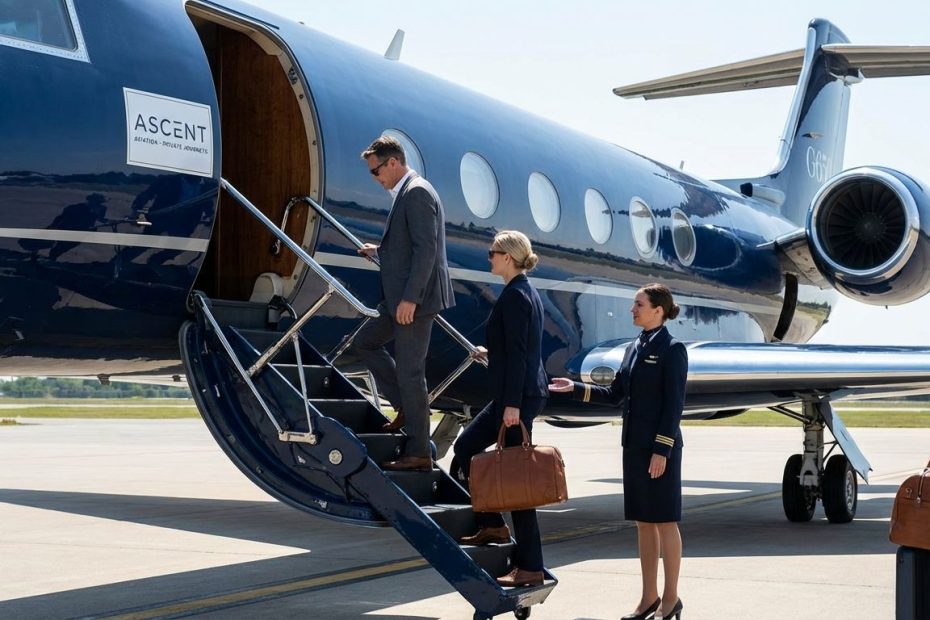
People fly private when time, access, privacy, and trip control matter more than buying the lowest seat price. If you want the short answer, private aviation makes sense when it saves enough hours, removes enough friction, or solves enough routing problems to justify the premium.
You are usually not choosing between “expensive flight” and “cheap flight.” You are choosing between two very different travel systems. One runs on fixed schedules, crowded terminals, and airline network limitations. The other lets you control departure timing, use smaller airports, move groups more efficiently, and reduce the drag that often turns a short trip into a full-day production.
This article breaks down why people choose private aviation, where the value is real, where it gets overstated, and how to think about time, cost, and comfort without the usual hype. If you need to judge whether private flying is practical for business travel, family trips, groups, pets, or hard-to-reach destinations, this will give you a clear decision lens.
Is Flying Private Actually Worth It, Or Is It Just A Luxury?
If you are judging private aviation by the ticket price alone, it will look excessive in most cases. A scheduled airline seat almost always wins on raw price. That comparison misses the actual reason people book private aircraft, which is not just the seat or the cabin finish. The real value comes from buying control over the trip itself, from departure timing to airport choice to how much of your day remains intact once the travel is over.
You see the difference fastest when your itinerary is inconvenient for airline travel. A same-day business visit to a smaller city, a multi-stop route, a trip with six or seven travelers, or a family journey with pets and bags can make commercial travel far more expensive in time and hassle than the airfare suggests. When you add missed work time, overnight stays, extra ground transfers, premium commercial fares, and schedule disruption, the spread narrows. For some trips, the numbers still favor the airlines by a wide margin. For others, private aviation starts to look less like indulgence and more like a high-cost efficiency tool.
The strongest use case shows up when your calendar has no room for dead time. If arriving at the airport two hours early, connecting through a hub, waiting for baggage, and driving from a major airport turns a simple visit into an all-day exercise, private flying changes the math fast. That is why executives, founders, deal teams, entertainers, athletes, families with complex travel needs, and owners of time-sensitive operations keep returning to it. They are not paying just for a better cabin. They are paying to avoid the commercial travel system.
You should also separate “worth it” from “affordable.” Many people can afford a private charter and still decide it is not worth the spend for an easy nonstop route between major hubs. That is a rational call. The value jumps when the trip is operationally messy, when you need reliability on your own schedule, or when several travelers are moving together and every lost hour has a cost attached to it.
How Much Time Does Flying Private Really Save?
Time savings are the strongest argument for flying private, and they come from more than one place. You save time before the flight because you are not moving through the same terminal flow as airline passengers. You save time during the trip because private aircraft can use a broader set of airports. You save time after landing because you are often closer to your real destination and can leave the airport quickly.
In the United States, the difference in airport access matters a lot. Scheduled airline service is concentrated in a relatively limited set of commercial-service airports, while private aviation can use a far larger network of public-use airports. That means your departure airport may be closer to your office or home, and your arrival airport may be much closer to the plant, resort, job site, campus, or client office you actually need to reach. A shorter drive on both ends can save more time than the flight itself.
The predeparture process is where many travelers feel the benefit immediately. Commercial travelers are often told to arrive well before boarding, especially when the airport is busy or the travel window is tight. Private flying through a fixed-base operator, which is the private terminal and service facility used in general aviation, cuts much of that dwell time. You usually arrive much closer to departure, move through a simpler process, board fast, and leave when the aircraft is ready. That changes the feel of the day as much as the clock time.
The routing advantage matters just as much. A commercial airline network is built around hubs and banked schedules, not your exact trip objective. If you need to visit two smaller cities in one day, the airline schedule may force an overnight stay or a long connection. A private aircraft can often run a direct mission, keep your group together, and return you home the same evening. That is where business aviation earns its reputation for compressing travel days that would otherwise spill into two or three calendar days.
You should also count time saved from reduced uncertainty. Delays exist in private aviation too, and weather still rules the skies, but you remove several common commercial friction points at once: long check-in lines, crowded boarding gates, slow baggage retrieval, and missed connections between airline segments. Less uncertainty means fewer buffer hours built into the day. When you measure total trip time from doorstep to final destination, private aviation often wins by more than people expect.
Is Flying Private More Comfortable Than First Class?
Comfort is where many people make the wrong comparison. If you compare the best private aircraft cabins with average commercial seats, private will look superior without much debate. If you compare some private jets with the best international first-class suites, the answer gets more complicated. The private cabin does not always win on seat engineering or sleeping arrangements. What it usually wins on is privacy, calm, flexibility, and control.
You are in a quieter, more contained environment with people you already know. That changes how the trip feels. You can hold sensitive discussions without strangers nearby, spread out work materials, manage family travel with less public stress, and move at a pace that fits your group instead of the boarding flow of a full aircraft. Many travelers who use private aviation regularly will say that the soft comfort factors matter more than the seat itself.
The best way to think about comfort is to widen the definition. Comfort begins before takeoff and continues after landing. Avoiding packed terminals, gate changes, overhead-bin battles, and deplaning queues removes a large share of the fatigue people associate with flying. If you travel with children, older relatives, pets, medical considerations, or oversized bags, that difference grows quickly. You are not performing the usual airport choreography in front of hundreds of strangers. You are moving through a much simpler travel day.
Cabin comfort still varies by aircraft type. A very light jet, which is a smaller private jet category designed for shorter trips and fewer passengers, is not the same experience as a super-midsize or large-cabin jet. Some small aircraft have limited stand-up room, simpler seating, and a cabin feel that is efficient rather than plush. That matters if you are buying on comfort alone. If your route is short, you may not care. If you are flying longer distances, the aircraft category matters a great deal.
You should also factor in customization. Food, timing, passenger mix, baggage handling, and cabin use revolve around your mission. That sounds simple, but it changes the travel experience in a meaningful way. The ability to board, sit down, leave, and stay in your own environment without the usual public friction is one of the clearest reasons private flying feels better, even when the physical seat is not more luxurious than the best airline product on the market.
How Much Does It Cost To Fly Private, And When Does It Make Sense?
The price of private flying varies more than most buyers expect. Aircraft category, route length, repositioning, crew logistics, airport fees, fuel conditions, minimum flight time rules, overnight charges, and peak-period pricing all affect the final number. That is why one route may look surprisingly attainable and another may look far above what the advertised hourly rate suggested.
Broad charter pricing commonly ranges from a few thousand dollars per billable hour for smaller jets up to well into five figures per hour for large-cabin and ultra-long-range aircraft. Jet card programs, which let you prepay for access at published rates and terms, often price higher than simple ad hoc charter quotes because they package convenience, availability commitments, and clearer service rules. Fractional ownership, which gives you a share in an aircraft program, usually fits repeat users with higher annual flying volume and a longer planning horizon.
You should be careful with headline hourly numbers because they can create false confidence. Private aviation pricing is not as simple as multiplying block hours by a flat rate. Some trips require the aircraft to reposition from another airport before your departure. Some providers apply daily minimums that raise the effective cost of very short flights. Busy travel days may add surcharges. The quote also depends on what class of aircraft can actually perform the trip with the passenger count, baggage load, and runway requirements involved.
Where the spend starts to make sense is in the all-in comparison. A private charter for a group of six to eight passengers can look far less extreme when you compare it with last-minute business-class or first-class fares, checked bags, ground transport, hotel nights created by awkward airline schedules, and the cost of lost time. If the trip supports a high-value meeting, a site visit, a closing timeline, a live event, or a tightly managed family itinerary, the premium may be easier to defend than the sticker shock suggests.
You should also keep mission fit front and center. Booking a private aircraft for a simple route with frequent airline service and cheap premium seats is usually a weak value play. Booking private for a route with poor service, multiple travelers, tight timing, and expensive schedule risk is a different equation. The market supports private aviation because there are many trips where schedule control and operational simplicity carry measurable value, even when the airfare comparison alone looks brutal.
There is also a difference between “cost-effective” and “cheap.” Private aviation is rarely cheap in any normal sense. It becomes cost-effective when it protects enough time, avoids enough operational drag, or supports enough passenger utility to justify the spend. That is a sharper and more useful standard for evaluating it.
Why Do Business Travelers And Executives Choose Private Jets?
Business travelers choose private aviation when they need speed, flexibility, privacy, and direct access that airline networks do not provide. If you run a company, manage a deal team, lead field operations, or cover multiple facilities across different cities, airline schedules often force you into time-wasting routings. Private aircraft let you build the trip around the work rather than forcing the work around the route network.
One major advantage is multi-stop efficiency. A team can leave in the morning, visit more than one location, conduct meetings in transit, and return home the same day. That has real value when the travel party includes several well-compensated people whose schedules are hard to align. One extra hotel night, one missed client meeting, or one delayed operational decision can cost more than many buyers want to admit. Business aviation reduces that slippage.
You also gain confidentiality and working time. Commercial first class can be comfortable, but it is still public transport. On a private aircraft, your team can review contracts, discuss pricing, prepare board materials, rehearse investor meetings, or debrief after a site visit without worrying about who is in the next seat. That privacy is not cosmetic. It supports productivity and protects sensitive information.
Geographic reach is another major reason companies use private aircraft. Many plants, energy sites, manufacturing hubs, university towns, and regional markets are not served well by commercial airlines. A private aircraft can often get your team much closer to the destination, which cuts ground transfer time and reduces the odds that a tight itinerary falls apart. If you are responsible for operations in multiple locations, that access matters more than cabin luxury.
There is also a coordination benefit when key people travel together. You avoid splitting the team across different airline bookings, dealing with scattered arrivals, or losing contact during a connection chain. Everyone departs together, arrives together, and works from the same schedule. For leadership teams, technical crews, legal groups, performers, and project teams, that coordination value is substantial.
You should think of business aviation as an operating tool, not just a premium travel option. It is often used when the cost of delay is real, the number of moving parts is high, and the destination pattern does not map cleanly onto airline service. In those conditions, private aviation supports speed of execution in a way commercial travel usually cannot match.
Can Flying Private Ever Be Cost-Effective For Families, Groups, Or Pets?
Yes, but only under certain conditions, and you should be realistic about which ones. Private aviation can make more sense for families and groups when the trip already carries high commercial costs, the route is inconvenient, or the logistics are unusually difficult. It is not the default smart choice for a routine vacation between large hub airports. It becomes easier to justify when the trip turns messy on the airlines.
Group travel changes the math quickly. If six, seven, or eight people are traveling together and the airline alternative involves premium fares, separate baggage fees, long airport dwell time, ground transfers from a major airport, and an overnight stay created by the schedule, the private quote starts to look less absurd. You are buying one aircraft instead of many seats, and everyone stays on one plan. That matters when the group includes older relatives, children, assistants, security staff, or specialized equipment.
Pets are one of the strongest nonbusiness reasons people move into private flying. Commercial pet rules, cargo concerns, size restrictions, and airport stress can turn a manageable trip into a problem. A private aircraft removes many of those pain points and gives you far more control over the experience. For travelers who never want a pet separated, delayed, or forced into a difficult airline process, this single variable can carry significant weight in the decision.
Family travel brings its own set of advantages. Boarding fast, reducing crowd exposure, simplifying bags, avoiding tight connections, and leaving from a quieter terminal can make a large difference when children are tired or when the trip has many moving parts. The benefit is not just convenience. It reduces the chance that one disruption turns the entire travel day into chaos.
Holiday travel, ski trips, resort destinations near smaller airports, and multi-generational travel tend to be the strongest leisure use cases. These trips often involve bulky bags, limited airline schedules, expensive last-minute fares, and passengers with different stamina levels. When you can depart closer to home and land much closer to the destination, the time and stress savings become much easier to value. It is still a premium product, but the premium can be more rational than it looks from the outside.
You should also keep expectations grounded. Private aviation does not magically make all family travel economical. It remains a costly mode of transport. The reason it works for some families is that the alternatives can be expensive in hidden ways: missed sleep, extended ground transfers, complex pet handling, overnight stops, and schedule failures that ripple through the entire trip. If those costs matter enough, private aviation can earn its place.
Are Empty Legs, Jet Cards, Or Fractional Ownership Cheaper Ways To Fly Private?
They can be, but each option solves a different problem, and none of them is simply “cheap private flying.” An empty leg is a discounted repositioning flight when the aircraft needs to move for operational reasons. A jet card gives you prepaid access under a set of published terms. Fractional ownership gives you a structured ownership share inside a managed program. Each model trades price, certainty, flexibility, and commitment in a different way.
Empty legs attract attention because the discounts can look dramatic. They work best if your schedule is flexible and you can tolerate change. That is the catch. The flight exists because the aircraft already has another mission driving its movement, so your plan depends on someone else’s plan holding up. If the primary trip changes, your empty leg can change with it. That makes empty legs useful for opportunistic leisure travel, but weak for business trips or anything with hard timing requirements.
Jet cards appeal to travelers who want easier repeat booking without full ownership. You usually buy a block of hours or deposit funds into a provider program, then book against established rate and availability rules. This can improve predictability, simplify planning, and reduce quote-by-quote shopping fatigue. The tradeoff is that the hourly cost may exceed a good spot-market charter deal, and the fine print matters. Peak-day restrictions, service areas, taxi time policies, and aircraft substitution rules can affect what you actually receive.
Fractional ownership serves a different user profile. It often fits people or companies that fly enough to justify a longer commitment and want a more structured access model. You gain consistency and a deeper service relationship, but you also take on a larger financial and contractual commitment. It is not an entry-level move, and it is usually a poor fit if your flight volume is modest or your mission pattern is unpredictable.
The smartest way to evaluate these options is to match the product to your usage pattern. If you want occasional private travel and can work around a moving schedule, empty legs may deliver value. If you want repeat access with simpler booking and less uncertainty, jet cards can make sense. If you fly often enough to value long-term program structure and are comfortable with a bigger commitment, fractional ownership may earn a look. None of these models is universally best. Fit matters more than marketing.
You should also stay disciplined about true cost. A lower posted rate means little if the product fails when you need it, limits the airports you want, or adds enough restrictions to erode the convenience you were paying for. Private aviation is full of buyers who chased the cheapest headline and later paid for it in reduced flexibility or unexpected fees. Reliable access usually costs more than opportunistic access, and that is normal.
What Hidden Benefits Do People Miss When Comparing Private Flights With Commercial Tickets?
Most comparisons fail because they focus on airfare and ignore friction. The hidden benefits of private aviation sit in the hours you do not spend waiting, the miles you do not drive from a major airport, the overnight stays you do not need, and the energy you do not burn dealing with the commercial travel system. Those are real costs, even when they do not appear on the airline ticket receipt.
One hidden benefit is schedule precision. You can leave when the trip requires, not when the airline happens to offer a seat. That matters when the meeting runs long, the weather window changes, a client adds a stop, or your family needs a later departure. Commercial travel forces your day to fit its timetable. Private flying lets the timetable serve the day.
Another often-missed benefit is passenger unity. If you are moving a team, family, or client group, keeping everyone on the same aircraft eliminates a surprising amount of risk. No split reservations, no separated cabins, no missed connections for one traveler, no scattered baggage issues, and no need to rebuild the trip when one segment fails. The larger the group and the tighter the timing, the more valuable this becomes.
There is also a cognitive load benefit that frequent travelers understand well. Commercial travel demands constant monitoring: airport traffic, security wait times, boarding windows, gate changes, carry-on rules, baggage retrieval, rental car lines, and connection risk. Private aviation strips much of that out. The trip becomes simpler to manage, which leaves more focus for the actual reason you are traveling.
Access to smaller airports may be the least glamorous and most powerful advantage of all. When you can land closer to a rural facility, mountain resort, factory site, or second-tier city, you cut exposure to road time and schedule fragility. The travel day gets shorter and more controlled at the same time. That is one reason private aviation remains so useful even to buyers who are not chasing luxury at all.
You should also account for recovery time. A travel day that drains fewer hours and creates less stress has value after arrival too. You are more likely to arrive ready for the meeting, event, inspection, or family commitment that justified the trip in the first place. That is difficult to measure on paper, but experienced travelers know it matters.
Why Do People Fly Private?
- Time Savings: Shorter airport process, closer airports, fewer delays
- Schedule Control: Departure timing built around your trip
- Privacy: Better for business discussions, families, and pets
- Access: Easier reach to smaller cities and regional airports
- Group Efficiency: One aircraft can work better than many airline seats
Make The Right Call For Your Next Trip
If you want to judge private aviation correctly, stop comparing it only to the price of an airline seat. Compare total travel time, airport access, schedule flexibility, privacy, group coordination, and the cost of disruption. Private flying earns its value when your trip is time-sensitive, operationally complex, group-based, pet-related, or tied to places the airline system does not serve well. It loses value fast on easy hub-to-hub routes where commercial premium cabins already do the job. Use that filter, and the decision gets much sharper.

Robert Wilkos is the co-founder of VIPJets.com and a private aviation executive leading luxury charter services through a global network of 10,000+ aircraft. He champions rigorous Wyvern/ARGUS safety standards, 24/7 concierge support, and flexible options like the 25-Hour Jet Card, along with ground and air-medical transport.