
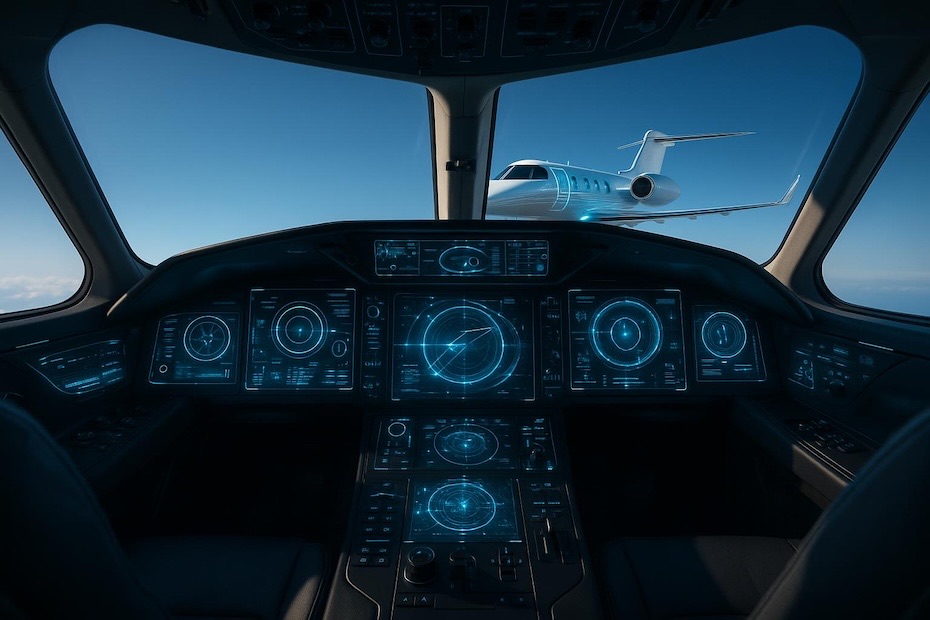
Artificial intelligence is fundamentally reshaping the private aviation landscape, moving beyond a futuristic concept to a present-day reality that enhances safety, efficiency, and personalization. The AI revolution in private aviation is not merely an upgrade to existing systems; it is a complete operational transformation. This article will guide you through the specific ways AI is being implemented, from the flight deck to the cabin, and what it means for the future of luxury air travel. You will learn how these intelligent systems are creating a safer, more streamlined, and deeply personalized flight experience.
How is AI Being Used in Private Aviation Today?
Artificial intelligence is already deeply integrated into modern private aviation, working behind the scenes to optimize nearly every facet of your journey. It is the invisible hand that streamlines operations, from the moment you book a charter to the final touchdown. AI-powered platforms are revolutionizing the charter market by connecting brokers and operators with unprecedented speed and precision, allowing for real-time aircraft matching and dynamic pricing based on a multitude of variables [1].
In the flight department, AI is a critical tool for enhancing operational efficiency. It powers sophisticated software that assists with everything from fuel planning to crew scheduling. For instance, AI algorithms analyze fuel prices, aircraft weight, and airport infrastructure to recommend the most cost-effective fueling strategy, a process known as fuel tankering. This not only reduces operational expenses but also contributes to a lower environmental footprint by minimizing carbon emissions [2].
Furthermore, AI is becoming a core component of financial management within flight departments. It automates complex tasks like expense categorization and forecasting, providing clear visibility into cash flow and ensuring compliance with intricate ownership structures. This level of automation frees up human personnel to focus on higher-value tasks, such as client relations and strategic planning, making the entire operation more agile and responsive.
How Does AI Improve Safety in Private Jets?
Safety is the bedrock of the aviation industry, and artificial intelligence is introducing a new layer of protection and foresight. The most significant contribution of AI to private jet safety is in the realm of predictive maintenance. By analyzing vast streams of data from an aircraft’s sensors and maintenance logs, AI algorithms can identify subtle patterns and anomalies that precede component failure. This allows maintenance to be performed proactively, before a potential issue can become a critical safety risk [3].
This data-driven approach is a departure from traditional scheduled maintenance, where parts are replaced at fixed intervals regardless of their actual condition. Predictive maintenance ensures that components are replaced precisely when they need to be, reducing the likelihood of in-flight mechanical failures and minimizing unnecessary maintenance. As Fern Campos, the Aviation Director of Maintenance at Disney Aviation Group, noted, the industry is ready for this shift, and the technology is already in place to monitor specific flight factors and operating parameters in real time [3].
Beyond maintenance, AI is also enhancing pilot training and decision-making. Advanced flight simulators now use AI-powered scenarios to replicate a wide range of challenging and unexpected real-world situations, from severe weather to complex systems failures. This allows pilots to build and hone their response skills in a safe, controlled environment, ensuring they are better prepared to handle any eventuality in the air. The ultimate goal is to create a symbiotic relationship between the pilot and the aircraft’s intelligent systems, where the human remains the final authority, but is supported by a powerful layer of AI-driven insights and recommendations.
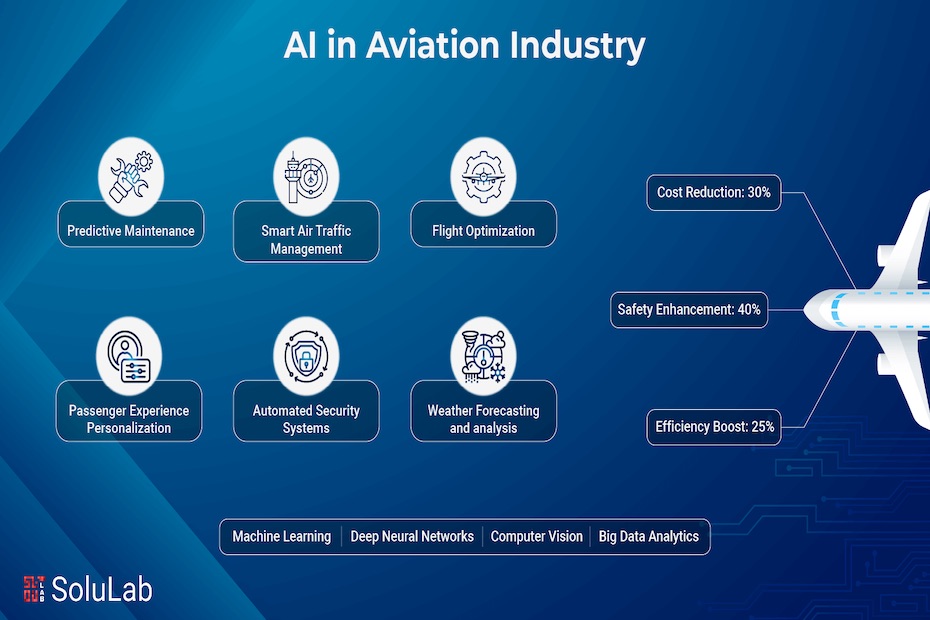
How Does AI Make Private Aviation More Efficient?
Efficiency in private aviation is measured in both time and money, and AI is delivering significant improvements on both fronts. The efficiency gains begin with the booking process itself. AI-driven platforms can now process complex charter requests in seconds, matching client requirements with available aircraft and providing optimized pricing without the need for lengthy back-and-forth communication. This speed and precision are transforming the charter market, making it more accessible and transparent for clients.
Once a flight is booked, AI continues to optimize the journey. AI-powered flight planning systems analyze a complex web of variables—including real-time weather data, air traffic control constraints, and aircraft performance—to plot the most efficient route. This not only ensures the fastest possible travel time but also minimizes fuel consumption, a significant operational cost. By continuously recalculating and adjusting the flight path en route, these systems can navigate around developing weather systems and air traffic congestion, avoiding delays and ensuring a smooth, uninterrupted journey.
Crew management is another area where AI is driving efficiency. Optimizing crew schedules is a complex logistical puzzle, involving compliance with strict duty time regulations, crew member qualifications, and personal preferences. AI-powered scheduling tools can solve this puzzle in a fraction of the time it would take a human planner, ensuring that crews are utilized effectively, fatigue risks are minimized, and the flight operation runs like a well-oiled machine.
How is AI Personalizing the Luxury Flight Experience?
The pinnacle of luxury is personalization, and artificial intelligence is enabling a level of bespoke service in private aviation that was previously unimaginable. The goal is to create a
seamless and intuitive environment where the aircraft anticipates and caters to your every need, often before you even have to ask. This is achieved by creating a detailed profile of your preferences, which is then used to customize every aspect of your journey [4].
This personalization begins the moment you step on board. The cabin environment—lighting, temperature, and even the opacity of the windows—can be automatically adjusted to your pre-set preferences. Your favorite music might begin to play softly as you settle in, and the in-flight entertainment system will be pre-loaded with movies, television shows, and news publications that align with your tastes. Your preferred beverages and snacks will be waiting for you, all without you having to make a single request.
This level of customization is made possible by a network of sensors and smart cabin technologies that are connected to a central AI-powered control system. This system learns your preferences over time, becoming more adept at anticipating your needs with each flight. The result is a travel experience that feels less like a mode of transportation and more like a home away from home, a perfectly curated environment designed for your comfort and productivity.
Key Personalization Features
- Automated Cabin Environment: Lighting, temperature, and window shades adjust to your preferences.
- Curated Entertainment: In-flight entertainment system is pre-loaded with your favorite content.
- Personalized Catering: Your preferred meals, snacks, and beverages are prepared in advance.
- Intelligent Assistance: AI-powered virtual assistants can handle requests and provide information.
What are the Most Advanced AI Technologies Being Used?
The AI revolution in private aviation is being driven by a suite of advanced technologies, each playing a distinct but complementary role. At the core of this transformation are machine learning and deep learning models. These are the technologies that enable predictive maintenance systems to forecast component failures with remarkable accuracy. By training on vast datasets of historical maintenance records and real-time sensor data, these models can identify the subtle signatures of impending issues, allowing for proactive intervention [3].
Bayesian networks are another powerful AI tool being used, particularly for decision-making under uncertainty. These models use probabilistic reasoning to map the complex relationships between an aircraft’s various systems and components. When a potential issue is detected, a Bayesian network can calculate the likelihood of various root causes, helping maintenance technicians diagnose the problem more quickly and accurately. This is a significant step beyond simple rule-based alert systems, providing a more nuanced and intelligent approach to troubleshooting.
In the cockpit and cabin, we are seeing the rise of natural language processing (NLP) and computer vision. NLP is the technology that allows pilots and passengers to interact with the aircraft’s systems using voice commands, creating a more intuitive and hands-free control interface. Computer vision, meanwhile, is being used to enhance security through facial recognition and to monitor the cabin for any potential safety or comfort issues. Together, these technologies are creating a more intelligent and responsive aircraft environment.
What Does the Future of AI in Private Aviation Look Like?
The future of AI in private aviation is not just about incremental improvements; it is about a fundamental reimagining of what is possible. We are on the cusp of an era of semi-autonomous and eventually fully autonomous flight for business aircraft. While the concept of a pilotless private jet may still seem like science fiction to some, the foundational technologies are already being developed and tested. Anduril’s successful first flight of its unmanned “Fury” jet, a Collaborative Combat Aircraft powered by AI, is a clear indication of the direction in which the industry is heading [5].
In the nearer term, we can expect to see AI take on an increasingly significant role as a co-pilot in the flight deck. AI-powered systems will provide pilots with a new level of situational awareness and decision support, analyzing data from a wide array of sensors to identify potential risks and recommend optimal courses of action. This will not replace the pilot, but rather augment their capabilities, reducing workload and allowing them to focus on high-level strategic decision-making.
The passenger experience will also continue to become more deeply personalized and immersive. Imagine a cabin that can not only adjust the lighting and temperature to your liking but can also create a virtual environment that transports you to a serene beach or a bustling city street. This is the promise of advanced virtual and augmented reality systems, powered by AI, that will transform the aircraft cabin into a fully customizable personal space.
What are the Challenges and Considerations for AI Implementation?
The integration of artificial intelligence into private aviation is not without its challenges and requires careful consideration to ensure that it is done safely and responsibly. The primary concern, as with any new aviation technology, is airworthiness and safety. As Len Beauchemin, a leading expert on predictive maintenance, emphasizes, AI must never negatively impact the baseline of airworthiness that the industry has worked so hard to achieve. Any AI system that is used to make safety-critical decisions must be rigorously tested and validated, and it must be approved by regulatory bodies such as the FAA and EASA [3].
Data security and privacy are another major consideration. AI systems rely on vast amounts of data, much of which can be sensitive. This includes operational data from the aircraft, as well as personal data about passenger preferences. It is imperative that this data is protected with robust cybersecurity measures to prevent unauthorized access or misuse. The question of data ownership is also a complex one. As a general principle, the aircraft operator owns the data related to continued airworthiness, but the lines can become blurred when third-party AI vendors are involved in analyzing that data [3].
Finally, there is the human factor. The introduction of AI into the cockpit and the maintenance hangar will require a new set of skills and a new way of thinking for pilots and technicians. It is essential that these professionals receive the training they need to work effectively with these new intelligent systems. The goal is not to replace human expertise, but to augment it. As experts emphasize, when it comes to final return-to-service decisions, a human will—and should—always be in the loop [3].
The Data Backbone: Fueling the AI Engine
For artificial intelligence to perform its transformative work, it requires a constant and voluminous stream of high-quality data. This data is the lifeblood of the AI engine, and in modern aviation, it is being generated at an unprecedented rate. A contemporary private jet is a flying data center, equipped with thousands of sensors that monitor every aspect of its operation. These sensors track everything from engine vibration and temperature to the pressure in the hydraulic lines and the performance of the avionics systems. This is the raw material that predictive maintenance algorithms use to learn the unique operational signature of each aircraft and to detect the subtle deviations that may signal an impending issue.
This data is collected and stored in what is known as a digital twin—a virtual replica of the physical aircraft. The digital twin is not a static model; it is a dynamic, living representation that is continuously updated with real-time data from the aircraft. This allows for a level of analysis and simulation that was previously impossible. Maintenance technicians can use the digital twin to test various repair scenarios, and engineers can use it to model the impact of potential upgrades or modifications. It is a powerful tool for understanding and optimizing the entire lifecycle of the aircraft.
The creation and maintenance of this data ecosystem is a significant undertaking, requiring robust data storage, secure transmission, and sophisticated analytical tools. However, the return on this investment is substantial. By harnessing the power of this data, operators can move from a reactive to a proactive approach to maintenance, reducing downtime, lowering costs, and, most importantly, enhancing safety.
The Human-AI Partnership: A New Model for Aviation Expertise
The integration of AI into private aviation is not about replacing human expertise; it is about augmenting it. The most effective applications of AI are those that create a collaborative partnership between the human and the machine, where the strengths of each are leveraged to achieve a better outcome. In the cockpit, the pilot remains the ultimate authority, but they are supported by an AI co-pilot that can process vast amounts of information and provide critical decision support. This allows the pilot to maintain a higher level of situational awareness and to focus on the strategic aspects of flight management.
In the maintenance hangar, the relationship is similar. The AI system can analyze data and identify potential issues with a speed and accuracy that would be impossible for a human alone. However, it is the experienced maintenance technician who interprets the AI’s findings, makes the final diagnosis, and performs the necessary repairs. The AI provides the what, but the human provides the why and the how. This partnership between human intuition and machine intelligence is creating a new and more powerful model for aviation expertise.
This collaborative approach requires a new set of skills for aviation professionals. Pilots and technicians must be trained to understand how these AI systems work, to interpret their outputs, and to recognize their limitations. They must become adept at working alongside their digital counterparts, trusting their recommendations while also maintaining a healthy level of professional skepticism. The future of aviation expertise lies not in a competition between humans and machines, but in a seamless and effective partnership between the two.
The Regulatory Horizon: Paving the Way for AI in the Skies
The rapid advancement of AI in aviation is prompting a parallel evolution in the regulatory landscape. Aviation authorities like the FAA and EASA are actively working to develop a clear and comprehensive framework for the certification and oversight of AI-based systems. This is a complex and challenging task, as traditional certification methods were not designed for the dynamic and adaptive nature of machine learning algorithms. The goal is to create a regulatory pathway that ensures the safety and reliability of these new technologies without stifling innovation.
One of the key challenges is the issue of explainability, or the ability to understand how an AI system arrived at a particular decision. For safety-critical applications, it is not enough for an AI to be accurate; its reasoning must also be transparent and auditable. This is particularly important in the event of an incident, where investigators need to be able to reconstruct the decision-making process of both the human and the machine. Researchers are developing new techniques for explainable AI (XAI) that can provide clear and understandable justifications for their outputs, and these will be a critical component of the certification process.
The regulatory framework for AI in aviation will continue to evolve as the technology matures. It will be a collaborative effort between regulators, manufacturers, and operators, all working together to ensure that the integration of AI into the national airspace is done in a way that is safe, secure, and beneficial for all stakeholders. This is a foundational element of the AI revolution, and it is essential for building the public trust and confidence that will be necessary for the widespread adoption of these transformative technologies.
AI’s Impact on Private Aviation
How is AI changing private aviation? AI is revolutionizing private aviation by enabling predictive maintenance for enhanced safety, optimizing flight routes for efficiency, and delivering a hyper-personalized in-flight experience. It is the core technology driving a safer, smarter, and more luxurious era of air travel.
The Dawn of a New Era in Aviation
The AI revolution in private aviation is not a distant promise; it is happening now. From the flight deck to the cabin, intelligent systems are transforming every aspect of the private flight experience, making it safer, more efficient, and more personalized than ever before. This is more than just a technological upgrade; it is a fundamental shift in how we think about and interact with aircraft. As these technologies continue to mature, they will unlock new capabilities and create new opportunities, solidifying private aviation’s position as the pinnacle of luxury and efficiency in travel. The journey has just begun, and the future of flight is intelligent.
References
[1] AIBusiness. (2024, November 12). How AI Connects Private Aviation Brokers and Operators. Retrieved from https://aibusiness.com/verticals/how-ai-connects-private-aviation-brokers-and-operators
[2] MyAirOps. (2025, August 1). How AI Is Transforming Business Aviation and Flight Departments. Retrieved from https://myairops.com/blog/2025/08/ai-business-aviation/
[3] NBAA. (2024, November 5). Predictive AI Systems Could Revolutionize Aviation Maintenance. Retrieved from https://nbaa.org/news/business-aviation-insider/2024-11/predictive-ai-systems-could-revolutionize-aviation-maintenance/
[4] Jetswave Aviation. (2025, September 12). AI in Private Aviation: Personalizing Your Flight Experience. Retrieved from https://jetswave.com/ai-in-private-aviation-personalizing-your-flight-experience/
[5] CBS News. (2025, November 10). Anduril’s unmanned jet “Fury” makes first flight. Retrieved from https://www.cbsnews.com/news/anduril-unmanned-jet-fury-makes-first-flight-60-minutes/

Robert Wilkos is the co-founder of VIPJets.com and a private aviation executive leading luxury charter services through a global network of 10,000+ aircraft. He champions rigorous Wyvern/ARGUS safety standards, 24/7 concierge support, and flexible options like the 25-Hour Jet Card, along with ground and air-medical transport.