
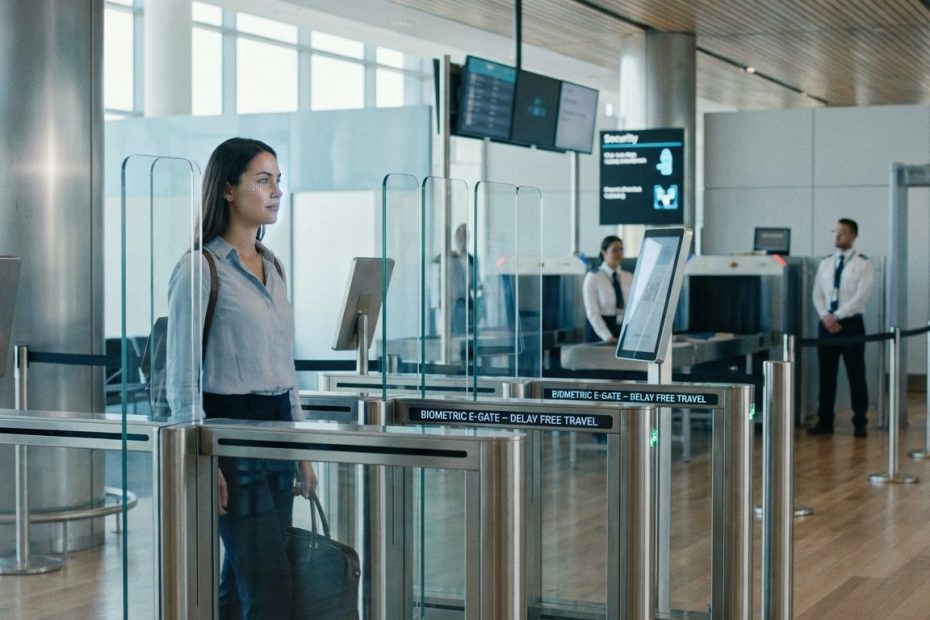
Smart airports cut lines and reduce delays by removing repeated ID checks, speeding security screening, and automating the slow “exceptions” that used to force every passenger into the same bottleneck. You feel the difference when a camera match replaces a document handoff, a CT scanner reduces bag pulls, or a self-bag-drop lane clears routine transactions without waiting for an agent.
This article breaks down the airport tech that is working in day-to-day operations, where it saves time, and where it still creates backups when staffing, uptime, or fallback processes are weak. You will get practical, operational answers to the same questions travelers ask at the curb, at TSA, at the gate, and at arrivals. Expect clear language, realistic constraints, and the decision points that determine whether “smart” becomes “fast” at your airport.
What Technology Is Actually Cutting Airport Lines Right Now?
The line-cutters already deployed at scale fall into a few categories: identity automation, screening modernization, and self-service check-in and bag handling. Identity automation shows up as facial matching at international arrivals, e-gates, and airline boarding or bag drop flows. Screening modernization shows up as CT checkpoint scanners and upgraded credential checking at the travel document checker. Self-service is the mix of kiosks, self-tagging, and self-bag-drop hardware that turns simple transactions into quick scans instead of long counter interactions.
From an operations seat, the biggest speed gains arrive when a process removes a repeated “hand-to-human” step without adding a new stop. A biometric match at arrivals replaces the micro-queue created by document handling and manual data confirmation, and it compresses the transaction into seconds when the lane is tuned and the passenger is eligible. CBP described its Simplified Arrival flow as facial biometrics that automate the manual document checks required for admission, with the photo captured at primary inspection and compared to a government-held image.
The second major category is throughput tech that lowers rechecks and bag pulls. Modern screening equipment and better automation reduce the number of passengers who get diverted into secondary checks, and those diversions are what turn a moving line into a stalled one. You can deploy more lanes, but the better play is reducing “exceptions per 100 passengers,” since that number drives queue volatility across the whole checkpoint.
Does Facial Recognition At Airports Really Make Security And Boarding Faster, And By How Much?
Facial recognition speeds up airport processing when it replaces a manual identity verification step that sits on the critical path. At international arrivals, CBP’s Simplified Arrival is designed to take the existing legal requirement to present a travel document and compress the identity verification into a photo capture and a system match, reviewed by an officer. CBP states the process takes only a few seconds and cited accuracy above 98% in its announcement about nationwide expansion at international U.S. airports.
At security and boarding, the time benefit depends on whether the biometric match is integrated or bolted on. If a camera match simply replaces an ID check at the travel document checker for eligible travelers, the throughput gain is real, but it is bounded by what happens right after, bins, divestment tables, staff instructions, and alarm resolution. If biometrics are layered as an extra consent screen, an extra “stand here” pause, or an extra troubleshooting stop, then the gain evaporates and the lane becomes fragile.
The other factor is enrollment and consistency. A biometric-enabled journey only feels fast when it works the same way each time you travel, with clear signage, a predictable opt-out path, and a staffed exception lane that does not cannibalize the main flow. When passengers are unsure whether a program applies to bag drop, TSA, boarding, or arrivals, they slow down at the exact point the system needs them to keep moving, which creates “decision delays” that behave like extra passengers in the queue.
Can You Opt Out Of Airport Biometrics, And Will Opting Out Slow You Down?
Opt-out is real in several U.S. government biometric uses, but it must be executed cleanly to avoid turning privacy choice into a throughput penalty. For CBP biometrics at arrivals, CBP states that travelers who wish to opt out can notify a CBP officer and be processed using the traditional procedure, with a valid travel document inspected by an officer.
Opt-out becomes operationally messy when it is not designed as a first-class path. If the lane requires the officer to stop the flow, walk around equipment, or manually route a passenger in a way that blocks others, then the passenger opting out becomes a moving obstacle and the line response is frustration. The fix is simple but non-negotiable: signage before the camera zone, a clear phrase staff use consistently, and a physical bypass that does not cross the main passenger stream.
From a performance standpoint, opting out should not mean “punishment time.” It should mean a predictable alternate transaction with defined service time, staffed and measured. When airports treat opt-out as an exception they rarely see, they create variability, and variability drives queues. When they treat opt-out as just another lane type, the queue stays stable and the airport avoids the worst failure mode, passengers slowing down because they feel surprised.
What Are CT Scanners At TSA Checkpoints, And Do They Reduce Delays?
CT scanners at checkpoints are designed to generate a more detailed view of what is inside a carry-on bag, improving threat detection and reducing the need to open bags for manual inspection. Operationally, that matters because each bag pull creates a micro-traffic jam at the end of the X-ray line, and the jam propagates backward into the divestment area. When you cut bag pulls, you raise the average speed and you reduce the stop-and-go behavior that makes a lane feel slow even when staffing looks adequate.
In practice, the delay reduction shows up when the entire lane is configured for the equipment. That means adequate divestment space, enough bins, staff positioned to keep bags flowing, and a resolution area that does not spill back into the belt. If an airport swaps hardware but keeps the same cramped geometry, the CT lane can still choke, not because the scanner is slow, but because everything around it is starved of space and labor at peak waves.
CT also changes passenger behavior, and behavior is throughput. If passengers receive mixed instructions about what stays in the bag, they hesitate, repack, and re-run items, which costs more time than the scanner ever saves. Airports that win with CT standardize the rules at that location, train staff to give one message, and use physical cues, not shouted corrections, to keep passengers moving at a steady cadence.
What Is “Touchless ID,” And Where Does It Get Used In The U.S.?
“Touchless ID” is the umbrella term travelers use when a face match replaces repeated presentation of ID at multiple points, bag drop, security document check, boarding, or arrivals. In the U.S., CBP describes its cloud-based Traveler Verification Service (TVS) as supporting biometric procedures for travelers to enter and exit the U.S., and it also outlines use cases tied to TSA and bag drop for eligible members, depending on configuration.
From an airport management standpoint, the value of touchless ID is not the camera. The value is removing repeated checks that create short lines in multiple places, because multiple short lines create missed flights more reliably than one well-managed line. When identity verification becomes a fast background step, the airport can push staff into exception handling, document problems, family groups, tight connections, and accessibility support, which is where missed departures are prevented.
Where it works best is where the airport controls the passenger journey and can keep rules consistent across partners. Where it struggles is where the journey crosses too many organizational boundaries and each party runs a slightly different process, a different message, or a different fallback. You feel the friction when one touchpoint is automated and the next requires a manual check that forces passengers to dig for documents again, because the passenger experience becomes “start-stop-start,” and queues grow faster in a stop-start system.
Are Self-Bag-Drop Kiosks And Automation Reducing Check-In Lines, Or Moving The Bottleneck?
Self-service bag drop reduces check-in lines when it separates routine transactions from exception transactions. Routine transactions are a tagged bag at standard weight with a passenger who already has a boarding pass and meets destination documentation rules. Exceptions are overweight bags, unclear items, destination requirements that need review, special service needs, tag print failures, and payments. If self-bag-drop lanes get flooded with exceptions, the line becomes slower than a staffed counter because the equipment is built for speed, not negotiation.
Airports that succeed design self-service as an operating model, not a hardware project. The lane needs a visible “help point” staffed by a roaming agent who resolves problems fast and keeps the belt fed, and it needs clear cutoffs where an exception is routed out of the lane quickly. When this is done well, you stop paying agent time to print tags and start paying agent time to solve the problems that actually threaten on-time departure and customer satisfaction.
Industry recognition is trending toward identity-enabled self-service because it reduces the most common failure point at bag drop, identity and journey verification. ACI World and Amadeus recognized a biometric-enabled self baggage drop initiative at Kempegowda International Airport as a winner in passenger-related process innovation, reinforcing that this is moving into daily operational maturity rather than staying stuck in pilots.
What Can Go Wrong When Airports “Go Smart,” And How Do Failures Create Delays?
Smart airports can process more passengers per hour, but they also create new single points of failure. When a manual process breaks, the impact is local. When a digital throughput system breaks, the impact spreads across multiple touchpoints because many stations depend on the same identity services, network availability, and back-end transaction systems.
The real-world failure mode is familiar: e-gates or automated lanes fail, staff fall back to manual processing, and a fast system turns into a slow one instantly. Reporting on an electronic passport gate failure in the UK highlighted how outages can cascade into long queues, especially when hundreds of gates are impacted and passengers are funneled into a smaller manual footprint.
The operational fix is not “avoid automation.” The fix is resilience engineering. Airports that protect throughput invest in redundancy for network and identity services, rehearse fallbacks that preserve flow, and staff a surge plan that can be activated without improvisation. The airport that wins is the airport that treats uptime, exception routing, and recovery time as core performance metrics, not IT footnotes.
How Do Airports Reduce Connection Delays For International Arrivals And Transfers?
Connection delays are rarely caused by the flight alone; they are caused by compounded queues. International-to-domestic transfers can force a passenger through arrivals processing, baggage claim, recheck, and TSA screening, all under tight time pressure. Every minute saved in those steps buys schedule resilience and reduces the rebooking load that creates downstream delays for the airline and the airport.
Biometric arrivals programs reduce friction at the primary inspection step by compressing identity verification into a short transaction for eligible travelers. CBP’s Simplified Arrival was described as automating manual document checks at the primary inspection point using facial biometrics, and it has been deployed across international airports in the U.S.
There is also a policy and partnership route: reducing repeat screening for certain connecting passengers. TSA announced a congressionally authorized “One Stop Security” pilot intended to exempt certain passengers arriving from select foreign airports from rescreening when connecting in the U.S., which targets one of the most painful transfer bottlenecks.
What Tech Makes Airport Lines Shorter?
- Biometric ID at arrivals, bag drop, boarding
- CT scanners that cut bag pulls
- Self-bag-drop with staffed exception handling
- Redundant systems and rehearsed fallbacks
Build A Faster Trip Through The Terminal
You get shorter airport lines when identity checks stop repeating, screening stops pulling bags unnecessarily, and exceptions stop clogging the main flow. Biometric arrivals and touchless ID compress the slowest handoffs into quick matches, and CBP’s published opt-out path works best when airports treat it as a normal lane option, not a disruption. Self-bag-drop and kiosk automation reduce counter congestion when you protect the lane from exceptions and staff a visible help position. The airports that keep delays down invest as much in uptime and fallback execution as they do in cameras and kiosks, because the fastest system is the one that keeps moving under pressure.
References
- U.S. Customs and Border Protection, “CBP Completes Simplified Arrival Expansion at All US Airports” ([cbp.gov](https://www.cbp.gov/newsroom/national-media-release/cbp-completes-simplified-arrival-expansion-all-us-airports))
- U.S. Customs and Border Protection, “Biometrics: Overview” ([cbp.gov](https://www.cbp.gov/travel/biometrics/overview))
- U.S. Customs and Border Protection, “Biometrics: Privacy Policy” ([cbp.gov](https://www.cbp.gov/travel/biometrics/biometric-privacy-policy))
- U.S. Customs and Border Protection, “Biometrics: Enhanced Passenger Processing” ([cbp.gov](https://www.cbp.gov/travel/biometrics/enhanced-passenger-processing))
- Transportation Security Administration, “One Stop Security Pilot Program” (GovDelivery bulletin) ([content.govdelivery.com](https://content.govdelivery.com/accounts/USDHSTSA/bulletins/3efe470))
- ACI World, “2025 Technology Innovation Awards Winners” ([aci.aero](https://aci.aero/2025/11/26/aci-world-and-amadeus-announce-the-worlds-most-innovative-airports-at-2025-technology-innovation-awards/))
- IATA, “One ID” ([iata.org](https://www.iata.org/en/programs/passenger/one-id/))
- The Guardian, reporting on UK e-gate disruption ([theguardian.com](https://www.theguardian.com/world/article/2024/may/08/queues-as-electronic-passport-gate-technology-fails-at-uk-airports))
- Reddit traveler discussions used for “real user” question patterns: United Airlines thread ([reddit.com](https://www.reddit.com/r/unitedairlines/comments/1aw0n7i)) and Austin TSA equipment thread ([reddit.com](https://www.reddit.com/r/Austin/comments/171jlex))

Robert Wilkos is the co-founder of VIPJets.com and a private aviation executive leading luxury charter services through a global network of 10,000+ aircraft. He champions rigorous Wyvern/ARGUS safety standards, 24/7 concierge support, and flexible options like the 25-Hour Jet Card, along with ground and air-medical transport.