
The pandemic permanently altered aviation by reshaping demand, accelerating digital adoption, changing fleets, reinforcing health standards, and forcing new revenue models. These five impacts define today’s industry.
In this article, you’ll examine the five most important changes that continue to influence strategy and operations in aviation. Along the way, you’ll also see answers to pressing questions travelers and executives often ask. This structured approach ensures you understand not just what changed, but why these changes will stay.
1. Shifts in Passenger Demand
Passenger demand never returned to its pre-crisis balance. International traffic fell by more than 75% during 2020, and structural changes remain visible.
Business travel contracted most severely. Roughly 40% of frequent corporate flyers say they’ll sustain reduced travel levels indefinitely. Technology-driven collaboration displaced routine face-to-face meetings, lowering the need for road warriors.
Leisure and blended “bleisure” travel surged in contrast. Passengers increasingly extend trips for personal purposes, forcing you to adapt pricing, scheduling, and loyalty programs to this new demand profile. This structural rebalancing has reshaped revenue forecasts for airlines worldwide.
2. Transformation of Passenger Processing
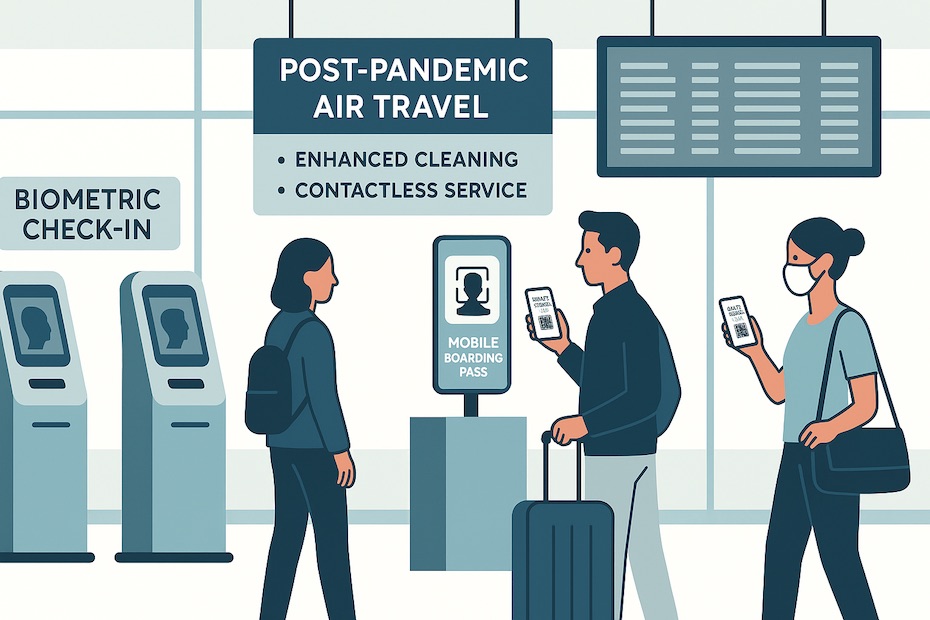
Airport operations moved sharply toward automation. By 2024, most major hubs implemented biometric boarding and mobile identity verification as primary systems.
India’s Digi Yatra program and U.S. airline biometric trials highlight how facial recognition now defines the boarding process. Queue times dropped, and throughput improved, making airports more efficient.
For leaders like you, the lesson is clear: integrate biometric and digital systems to deliver speed, cut staffing costs, and strengthen passenger satisfaction—while planning strong cybersecurity layers to protect data.
3. Fleet and Network Restructuring
The pandemic accelerated aircraft retirement cycles. Airlines permanently parked large, inefficient widebodies like Boeing 747s and Airbus A380s.
Focus shifted to mid-range and narrowbody fleets, offering versatility and lower operating costs. Networks also reoriented to prioritize profitable city pairs and regional connections.
Private aviation boomed at the same time. Membership programs and charter demand climbed as travelers sought flexibility, exclusivity, and reduced exposure to crowds. This segment remains a growth driver in your market planning.
4. Health and Safety Enhancements
Health became a competitive differentiator. Airlines upgraded cabins with HEPA filtration, antimicrobial materials, and touchless lavatory systems.
These features were marketed directly to passengers, reinforcing safety as a central brand promise. Cleanliness and hygiene are now inseparable from the passenger experience.
You must embed health-related upgrades permanently, not as temporary solutions. The new baseline includes advanced air systems, cabin sanitization protocols, and proactive communication around safety standards.
5. Reinvention of Revenue Models
Ticket revenue volatility forced airlines to reinvent. Ancillary income streams—baggage fees, seat upgrades, and bundled services—became critical to survival.
Cargo operations also expanded. “Preighters,” or passenger aircraft converted into cargo carriers, highlighted the flexibility of mixed-use strategies that remain in play today.
In private aviation, subscription services, jet cards, and digital booking platforms transformed access models. Customers value flexible, tech-enabled entry points into private travel, a permanent expectation you must now meet.
How did cargo operations become so important during the pandemic?
Cargo operations grew because airlines had to offset the collapse in passenger revenues. Medical supplies, vaccines, and consumer goods were shipped worldwide when cargo demand surged.
Passenger aircraft were repurposed into “preighters,” removing seats to maximize cargo capacity. That decision kept fleets flying and generated vital revenue at a time of extreme crisis. Today, many carriers continue cargo diversification, treating it as a permanent income source rather than a temporary measure.
Will biometric systems replace traditional travel documents?
Biometric systems won’t eliminate passports or visas yet, but they are becoming the default for identity verification in major airports. Boarding passes and ID checks are rapidly being replaced with facial scans.
Countries like Singapore, the U.S., and India already run large-scale biometric trials. By 2030, industry analysts expect most international hubs will rely on biometric-first processing, with traditional documents serving only as backups. For your planning, this means heavy investment in biometric infrastructure is no longer optional.
What are the Top lasting impacts of the pandemic on aviation?
- Shifts in passenger demand
- Automated passenger processing
- Fleet and network restructuring
- Health and safety enhancements
- Reinvented revenue models
In Conclusion
The pandemic left five enduring marks on aviation: demand shifts, automated processing, new fleet strategies, elevated safety standards, and diversified revenues. These are no longer adjustments—they are the foundation for how you operate going forward.
To explore more aviation strategies and decision-making insights, visit my linkedin for resources designed for leaders like you.

Robert Wilkos is the co-founder of VIPJets.com and a private aviation executive leading luxury charter services through a global network of 10,000+ aircraft. He champions rigorous Wyvern/ARGUS safety standards, 24/7 concierge support, and flexible options like the 25-Hour Jet Card, along with ground and air-medical transport.