
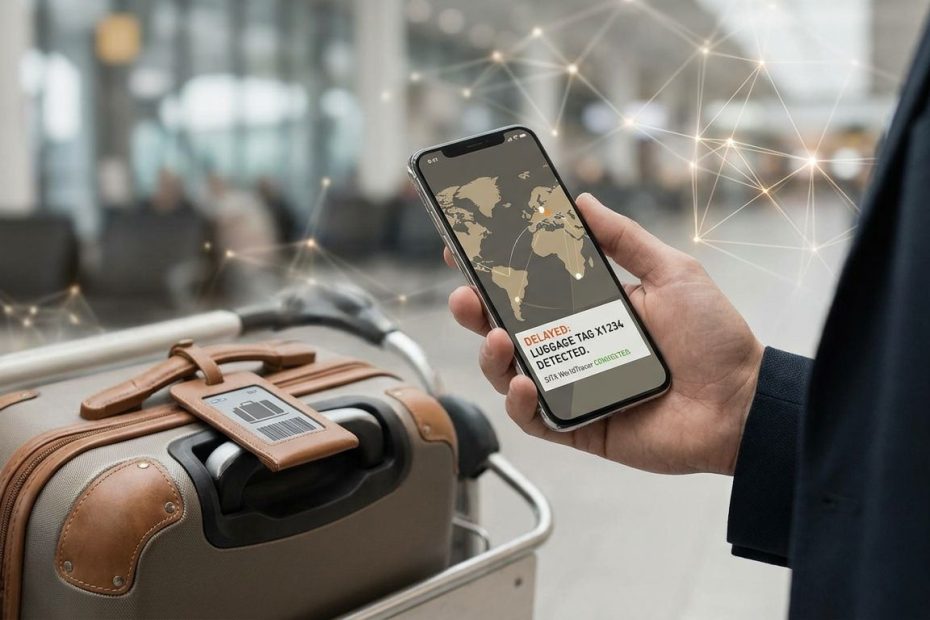
SITA WorldTracer now connects airline baggage recovery with passenger-shared locations from consumer trackers, which means your bag’s location can move from a screenshot on your phone into the system airline teams already use to trace delayed luggage. That shift matters because it shortens the gap between “you know where the bag is” and “the airline can act on it.”
If you want to understand where baggage tracking is heading, this is the change to watch. You will see how WorldTracer fits into airline operations, how Apple Find My and Google Find Hub feed into recovery workflows, which limits still matter, and what this means for the way you report, trace, and recover delayed baggage.
What Is SITA WorldTracer, And Why Does It Matter For Lost Luggage?
SITA WorldTracer is the airline industry’s leading baggage tracing platform for delayed, mishandled, and missing luggage. When your bag fails to arrive, the airline or ground handler opens a case in WorldTracer, matches bag tag data, reviews routing, checks transfer activity, and coordinates recovery across airports and carriers. You can think of it as the operating layer behind many baggage service desks, online tracing updates, and interline recovery workflows.
Its importance comes from scale and standardization. A consumer tracker can show a location on your phone, yet that information has limited operational value until it reaches the people who manage recovery inside their actual work system. WorldTracer closes that gap by putting shared item-location data inside the same environment where baggage teams already review scan history, delivery status, flight movement, and tracing records.
This matters even more when you look at baggage volume. Airlines process billions of passenger journeys, and even a small mishandling rate turns into millions of delayed bags across the global network. In that environment, speed matters, handoffs matter, and workflow discipline matters. A tracing platform is not just a database; it is the engine that organizes action across airports, stations, handlers, and partner airlines.
WorldTracer also sits inside a broader baggage technology stack. Airlines use it alongside self-service reporting tools, bag delivery coordination, messaging between carriers, and reflight handling. That means consumer tracker integration is not a bolt-on novelty. It becomes one more visibility input inside a system already designed to move cases from report to recovery.
If you travel often, the practical takeaway is simple: the value of a tracker rises sharply when the airline can use the location without leaving its own baggage workflow. That is what makes this more than a passenger convenience story. It is an operational change inside the system many airlines already depend on.
How Does SITA WorldTracer Connect With Apple AirTag And Find My?
The connection works through Apple’s Share Item Location feature inside Find My. If your bag is delayed and it contains an AirTag or another Find My network accessory, you can generate a secure link and share it with a participating airline. SITA built support for that shared location into WorldTracer, which allows baggage teams to review the location as part of the active tracing case rather than relying on verbal descriptions or screenshots.
That changes the old recovery pattern in a meaningful way. Before this integration, many travelers arrived at a baggage desk with stronger location visibility than the agent had. You might know your suitcase is still sitting near a transfer airport, in a baggage room, or at your arrival station, yet the airline team still had to work through standard tracing steps inside its own tools. The information you had was useful, but it often remained external to the official case record.
With Share Item Location tied into WorldTracer, your tracker data becomes structured recovery input. The baggage team can view the shared location within the environment it already uses for tracing and coordination. That reduces friction, cuts duplication, and improves the chance that the location will affect search priority, station follow-up, and bag allocation.
Apple designed the feature with controlled access. The owner decides when to share the item location, can stop sharing at any time, and the link expires automatically after a limited period. That matters for airlines as much as for travelers. Baggage teams get time-bound access for recovery use instead of open-ended surveillance or casual tracking.
For you as a traveler, the significance is straightforward. Your device does not replace the airline’s baggage record, but it adds verified proximity data that can strengthen the airline’s search process. That is the real breakthrough: consumer location-sharing becomes part of professional baggage recovery rather than staying outside it.
Which Airlines Support Sharing AirTag Locations For Delayed Baggage?
Support exists, but it does not look identical across every carrier. Apple named a group of major airlines that planned to accept shared Find My item locations for delayed or mishandled baggage, and that list included carriers across North America, Europe, Asia-Pacific, and international long-haul markets. The bigger point is not the size of the list alone. It is the fact that leading airlines began building consumer-tracker sharing into baggage support procedures.
You should not expect one universal process. Some airlines place the link inside an online baggage tracing form. Others route it through a customer service interaction after you file a delayed baggage report. Some carriers may prompt you only after the bag has remained unresolved for a certain period, especially when regular scan data has not been enough to identify the bag’s current position.
That variation reflects how airline operations actually work. Baggage systems are shared across networks, but service flows differ by carrier, airport, staffing model, and local station practice. A participating airline may support Find My sharing in one market through a polished self-service process, yet rely on service desk escalation in another. The integration is real, but the front-end experience still depends on airline execution.
If you fly often, the best move is to treat tracker sharing as an extension of the delayed baggage process, not a replacement for it. File the official report, keep your bag tag and reservation details ready, and follow the carrier’s instructions for item-location sharing if offered. That sequence matters because the airline still needs the tracing case, the bag tag record, and your delivery details to recover and return the bag.
The larger trend is what matters most. Once enough airlines accept shared tracker locations inside baggage workflows, consumer tracking stops being a niche tactic used by frequent travelers and becomes a normal part of lost-luggage recovery.
Do AirTags Actually Help Airlines Recover Luggage Faster?
Yes, and the strongest reason is not passenger peace of mind. It is recoverability. SITA reported that truly lost bags dropped sharply for bags using AirTag or another Find My accessory when item-location sharing through WorldTracer was enabled. That is the kind of metric airline operations teams pay attention to, because it speaks to lower claim exposure, faster resolution, and fewer cases sliding from delayed to permanently lost.
The value is strongest in the cases where traditional scan history leaves gaps. A bag may miss a connection, get pulled aside during transfer, remain at a destination station without being matched to the tracing file, or move through a partner handoff that delays visibility. In those moments, consumer tracker data can narrow the search area from “somewhere in the network” to a station, terminal, room, or local perimeter. That does not solve recovery on its own, yet it changes the urgency and direction of the search.
There is also a customer service effect. When you can provide the airline with a shared location, the conversation becomes more specific. Instead of repeating that your bag has not arrived, you can support the case with location evidence the baggage team can review within its own system. That reduces the familiar disconnect where a traveler sees the bag on a phone but the official record still says tracing continues without a clear lead.
User reports across travel communities have pointed to this gap for years. Travelers often said the tracker showed the bag’s location long before the airline acted, but the data sat outside the formal process. Integration changes that. It moves the tracker from a persuasive extra to an operational input.
You should still keep expectations realistic. A tracker can reveal location, but it cannot authorize ramp access, customs release, delivery dispatch, or interline transfer. It helps airlines recover luggage faster when it feeds the right workflow and reaches the right team. WorldTracer is valuable because it makes that handoff more direct.
Is SITA WorldTracer Only Working With Apple, Or Also With Android Trackers?
It is no longer an Apple-only story. SITA has also integrated Google’s Find Hub item-location sharing into WorldTracer, which broadens the model from one device ecosystem to a more open consumer-tracker recovery workflow. That matters for airlines because baggage operations need scale, and scale improves when more passengers can contribute compatible location data regardless of phone platform.
This also changes the article’s central theme. The real shift is not about one branded tracker winning the baggage race. It is about passenger-authorized location sharing becoming part of airline recovery infrastructure. Apple helped establish the first high-profile lane, and Google’s integration shows that SITA is pushing toward a platform model that can absorb multiple consumer tracking ecosystems.
For you, this means the baggage industry is moving toward broader interoperability. If your bag contains a supported tracker and your airline participates in the recovery flow, your location data is more likely to reach the baggage team in a usable form. That is a stronger model than asking travelers to argue from screenshots or manually explain where a tag appears on a map.
It also reduces the risk that baggage innovation gets trapped inside one hardware brand. Airports and airlines operate across mixed passenger bases, mixed devices, and mixed travel markets. A shared item-location model that supports more than one ecosystem stands a better chance of becoming standard operating practice rather than a premium feature for a narrow slice of travelers.
The competitive effect matters too. Once more ecosystems connect into baggage tracing, airlines can standardize service around the recovery process instead of around the brand of tracker a passenger owns. That is where the long-term value sits.
How Do You Share A Tracker Location With An Airline When A Bag Is Delayed?
The process starts with the official delayed baggage report. If your suitcase does not arrive, you report the bag to the airline, receive or confirm your tracing reference, and keep the bag tag number tied to the case. If your bag contains a compatible tracker, you then generate the location-sharing link through the relevant consumer-tracker app and submit it using the airline’s approved channel.
On Apple devices, that means using Find My to select the missing item and create a Share Item Location link. That link is designed for recovery use, not public distribution. It expires automatically after a limited period, and you remain in control of sharing. The airline may ask you to paste the link into an online baggage form, attach it to a delayed baggage case, or provide it through a service agent handling the claim.
With Google Find Hub integration, the logic is similar. You choose to share the bag’s location and the airline reviews that location inside WorldTracer. The important point is not which app you open first. The important point is that the location must be tied to an active baggage case so the airline can associate it with your missing bag, routing record, and delivery file.
You should also keep your reporting sequence disciplined. File the official claim before pushing tracker information. Include bag tag details, flight information, contact details, and delivery address. A shared location helps the airline search, but the baggage record still drives return handling, courier release, station communication, and claim administration.
If you want the quickest path, use a five-part routine: report the bag, confirm the tracing file, generate the tracker link, send it through the airline’s approved process, then monitor updates until delivery is confirmed. That creates the cleanest bridge between your device and the airline’s recovery operation.
Will Consumer Trackers Replace Airline Baggage Systems?
No. Consumer trackers complement airline baggage systems; they do not replace them. Airlines still depend on barcode bag tags, baggage reconciliation, airport scans, transfer messaging, custody records, and delivery workflows to manage a delayed-bag case from origin to return. A tracker adds one valuable layer of visibility, but the airline record still governs who handles the bag, where it is routed, and how it gets released back to you.
This distinction matters because public discussion often overstates what a tracker can do. A tag can show that a bag appears to be at an airport, near a terminal, or in a local area. It cannot prove chain of custody in the same way as a baggage tag record. It cannot substitute for airline scan events when two similar bags need to be matched to the correct passenger. It cannot independently trigger customs clearance, interline transfer, or courier dispatch.
What it can do is reduce uncertainty. If airline scans stop updating, a shared tracker location gives baggage teams another clue, often a very useful one. It helps narrow the search, validate the likely station, and direct effort toward a bag that may have fallen outside the normal exception-handling path. That is why SITA describes passenger-authorized tracking as an added visibility source rather than a replacement for airline systems.
You will get the best results when you treat trackers as evidence that strengthens the official case. The airline’s system still opens the file, routes the recovery work, confirms identity, and closes the loop with delivery. The tracker adds location intelligence that can make every one of those steps move faster.
The practical formula is simple: airline scan data proves handling history, your consumer tracker helps prove present proximity. When those two signals meet inside WorldTracer, baggage recovery becomes more efficient.
What Operational Benefits Does This Integration Create For Airlines, Airports, And Ground Handlers?
For airlines, the biggest gain is better case resolution. Mishandled baggage creates cost through manual tracing, station follow-up, customer care labor, delivery coordination, and compensation exposure. When a passenger-shared location arrives inside WorldTracer, the baggage team can work from a tighter search radius and a stronger evidence set. That reduces wasted effort and improves the odds of recovering the correct bag before the case grows older and more expensive.
Airports and ground handlers benefit from cleaner communication. In a traditional delayed-bag case, multiple parties may exchange messages with incomplete location certainty. A shared tracker signal can improve where staff look first and which local storage points they inspect. That matters in busy baggage rooms, transfer belts, reclaim hold areas, and offload zones where a delayed suitcase may remain physically close yet digitally hard to identify.
There is also a service consistency advantage. Frontline agents no longer need to improvise around screenshots, spoken descriptions, or photos from a passenger’s phone. They can work inside the tracing tool, with the case, the bag tag data, and the shared location all connected. That raises operational discipline and lowers the chance that useful passenger information gets lost in notes, emails, or manual handoffs.
For executive teams, this type of integration also supports better baggage performance metrics. Faster recovery lowers the pool of aging cases. Fewer aging cases lower the number of truly lost claims. That improves cost control and customer satisfaction at the same time, which is rare in airline operations where service upgrades often add expense rather than reduce it.
If you manage travel programs or monitor airline service quality, this is the metric path to watch: case age, delayed-bag closure speed, delivery timing, and the share of cases escalated beyond standard recovery windows. Consumer-tracker integration can influence all of them when deployed well.
What Limits Still Matter When You Use A Tracker To Find Delayed Luggage?
A tracker improves visibility, but it does not eliminate operational limits. Location readings may lag, update intermittently, or point to a general area rather than a precise baggage shelf. Airport environments add complexity because bags move through secured zones, underground systems, service roads, storage rooms, and partner handling spaces where staff access is controlled and retrieval requires process, not just awareness.
There is also the issue of case timing. If your bag has only just missed your flight, the airline may still be routing it on the next available service and may not need tracker data immediately. In later-stage cases where normal tracing has stalled, the shared location becomes more valuable. That means the same tracker link can be helpful in one case and less decisive in another, depending on what the airline already knows from scan history.
You should also expect differences in rollout maturity. Some airlines will handle shared item locations smoothly, with agents trained to use the information inside a defined workflow. Others may still be early in adoption, with varying station readiness and mixed customer communication. That does not reduce the value of the integration itself, but it does shape your day-to-day experience.
Battery life, accessory compatibility, and user setup still matter too. A tracker only helps if it is active, linked correctly, and capable of producing a shareable location. Consumer devices solve part of the baggage visibility problem, not the whole chain. Recovery still depends on airline execution after the location is shared.
The useful mindset is disciplined optimism. Carry the tracker, set it up correctly, keep your baggage documentation, and use the airline’s official reporting path. That combination gives you the strongest possible position when a bag goes off-script.
What Should You Do Differently As A Traveler Now That WorldTracer Supports Consumer Trackers?
You should build tracking into your normal baggage routine before the trip starts. Place a compatible tracker inside checked luggage, confirm that it is registered and visible in your app, and label the bag clearly with current contact details. Those small steps increase your options if the bag misses a connection or fails to arrive at your destination.
You should also change how you respond when a delay happens. Do not treat the tracker as a substitute for filing the baggage report. Report the bag immediately, capture the tracing reference, keep the claim record organized, and share the tracker location only through the airline’s supported path. Speed matters in baggage recovery, and a disciplined reporting chain gives the airline more room to act fast.
Another useful shift is expectation management. A tracker may show your suitcase sitting at the origin airport, a transfer hub, or your destination station. That information is valuable, yet your fastest recovery still depends on the airline connecting that location to your bag tag record and delivery workflow. Keep the communication factual, brief, and tied to the open tracing file.
If you travel for work, this change also affects contingency planning. A tracker now has stronger operational value, not just personal value. That can influence how you pack urgent items, when you decide to check luggage, and how you prepare for tight connections or multi-carrier itineraries. A bag with a compatible tracker is now more than easier to watch; it is easier to recover through formal channels.
The smart traveler response is simple: equip the bag, document the trip, report quickly, share the location correctly, and follow the case until delivery closes it. That is the new standard for baggage risk management.
How Does SITA WorldTracer Work With AirTag Or Other Consumer Trackers?
- SITA WorldTracer lets airlines use passenger-shared tracker locations inside baggage tracing.
- You file a delayed bag report, then share your item-location link.
- The airline reviews that location in its recovery workflow to find and return your bag faster.
Track Smarter, Recover Faster
Baggage recovery is moving from airline-only scan visibility to a model where your own tracker can support the official tracing process in real time. SITA WorldTracer matters because it turns consumer tracker data into something baggage teams can use inside the system they already trust. Apple Find My opened the door, Google Find Hub widened it, and the result is a stronger recovery path for delayed luggage across the travel chain. Your bag tag still drives custody and return, yet your tracker now has a clearer route into airline operations. If you want fewer blind spots when a suitcase goes missing, this is the baggage upgrade that changes what action looks like after the carousel stops turning.

Robert Wilkos is the co-founder of VIPJets.com and a private aviation executive leading luxury charter services through a global network of 10,000+ aircraft. He champions rigorous Wyvern/ARGUS safety standards, 24/7 concierge support, and flexible options like the 25-Hour Jet Card, along with ground and air-medical transport.